Apply for Master’s Thesis Proposals with Build Up Nepal

Are you passionate about innovative construction methods, sustainability, and contributing to real-world impact? Build Up Nepal is now offering exciting opportunities for students to complete their Master’s thesis while supporting rural development and earthquake resilience in Nepal.

We invite motivated students to apply for our Master’s Thesis Opportunities and collaborate with us on projects that make a difference!

Below are the available Master’s Thesis topics. Please find more information about each proposal by clicking on the link. BY clicking the green button at the bottom of the page you will come to our recruitment platform, where you can submit your interest.

Available Master’s Thesis Proposals:

If you are ready to work hands-on with our team and take part in innovative, real-world challenges, we encourage you to apply. If you cannot access the links and files above, please go to this Dropbox link where you can find and download the proposals as PDFs.

How to Apply:

Go to our recruitment platform Teamtailor and select the thesis proposal you’re interested in. You can submit your application through the platform. Please read the fact sheets above about the proposal you are interested in first. You can apply for more than one proposal.

If you have any additional questions, feel free to contact Henrik Gustavsson at henrik.gustavsson@ewb-swe.org


🌍 International Day of Peace - September 21st

On 21st September, the world observes the International Day of Peace, a day dedicated to upholding the ideals of peace at a time when it feels more fragile than ever. In today’s world, peace is not something we can take for granted. With rising tensions, armed conflicts, and aggression affecting countless communities globally, the situation is grim. Established by the United Nations in 1981, this day serves as a stark reminder that peace isn’t just an ideal—it’s a shared responsibility and an urgent call to action.

At EWB-SWE, we have long-standing experience working with underserved communities often located in the Global South, and while we do not operate in conflict or disaster zones, we’ve seen firsthand how vital peace is for communities to build the basic infrastructure needed for access to water, sanitation, shelter, food, education, and electricity. Peace is the cornerstone of humanitarian development.

A culture of peace

But peace is more than the absence of conflict. It encompasses respect, understanding, and cooperation between people from all walks of life. In a time when divisions seem to be growing, it is more important than ever to promote non-violence, inclusion, and dialogue. We can all play a role in healing divisions, standing against hatred, and nurturing a culture of peace.

Each of us has the power to make a difference. Whether by speaking out against injustice, embracing diversity, or encouraging conversations about peace and understanding, we can inspire others to join us. Together, we can build stronger, more compassionate communities that reflect the peaceful world we want to live in.

Speak up for peace

In today’s divided world, the call for peace must echo louder than ever. There are countless ways to engage, and everyone can be part of the conversation. Whether it's online or in person, we can raise awareness about the importance of understanding, non-violence, and disarmament. Use your voice and your words to challenge hate and promote unity.

Join the UN’s #PeaceBeginsWithMe movement, share stories of hope and change, and encourage others to do the same. Peace truly begins with each of us, and every action counts.

More info: Ten Actions for a Peaceful World
UN Main Page: International Day of Peace

Join our WASH Team!

Water and sanitation are the core of sustainable development. However, in recent decades human activity has led to severe water stress in locales across the world. Today, 2.2 billion people lack access to safely managed drinking water, and more than 4.2 billion people lack safely managed sanitation (United Nations, n.d.).

The WASH (water, sanitation and hygiene) competence team is one of the teams at EWB, which is working towards SDG 6 "Ensure availability and sustainable management of water and sanitation for all". This fall kicked off with a meet up with the WASH competence team in Gothenburg. We discussed strategy, water and sanitation solutions and mapped our competences. The discussions were very rewarding and we all felt very inspired in keeping up the good work. 

The team is always interested in new perspectives and engaged people. If you are interested in joining or if you have any questions about the WASH work, you are welcome to contact Alicia Bizet, head of the WASH team at wash@ewb-swe.org.

International Day of Science, Technology, and Innovation for the South: Advancing Science, Technology, and Innovation for a Fairer Global Future 

Today, 16th September, marks the International Day of Science, Technology, and Innovation for the South, an initiative recently established by the United Nations General Assembly. The day was officially proclaimed following the G77 and China Summit on Science, Technology, and Innovation held in Havana in 2023, to highlight the importance of science, technology, and innovation (STI) for sustainable development, particularly in the Global South

WATER TANK CONSTRUCTION, THE MAVUNO PROJECT, KAGERA, TANZANIA

The Global South includes nations in Africa, Latin America, Asia, and parts of the Middle East characterised by lower income levels, limited infrastructure, and economic and environmental vulnerabilities. For many of these nations, achieving sustainable development goals (SDGs) remains a daunting task due to persistent economic disparities, environmental challenges, and social inequalities. However, through the responsible use of technology and innovation, there is significant potential for positive impact.

At Engineers Without Borders Sweden (EWB-SWE), we are dedicated to creating sustainable engineering solutions that leave a lasting impact on communities in the Global South. Our projects focus on collaborating with local partners to deliver practical, impactful solutions that empower communities. We emphasise knowledge transfer, training, and capacity building, enabling communities to independently tackle development challenges and improve their long-term resilience.

The Role of Science, Technology and Innovation (STI) in the Global South

While global R&D spending rose to $2.5 trillion in 2022, the benefits remain unevenly distributed. High-income countries account for 77% of global R&D investment, while low-income countries contribute only 0.3%. This disparity limits access to technology and innovation in the Global South, creating barriers to addressing key issues like healthcare, education, and infrastructure. 

At EWB-SWE, we believe in the power of partnerships to create meaningful impact. Our international projects are designed to be locally driven and adapted to the specific needs of each community. Whether in water and sanitation, renewable energy, or infrastructure development, we work alongside local engineers and organisations to deliver innovative solutions with a focus on long-term sustainability.

Engineering for Humanity: Innovation as a Driver of Sustainable Solutions

The International Day of Science, Technology, and Innovation for the South serves as a reminder of the critical role that technology and innovation must play in achieving the SDGs. At EWB-SWE, we believe that innovation is not only about solving technical challenges—it’s about creating real, tangible impact in people’s lives.

One example of this is our work in renewable energy and water systems in rural Africa. By collaborating with local partners, we develop solar-powered water pumps and other sustainable solutions that directly address community needs while supporting local innovation and capacity. This aligns with our core belief in Engineering for Humanity—using engineering as a force for positive change in the world. 

Empowering the Global South through Impactful Collaboration

SOLAR PANELS DELIVERY FOR NEW SCHOOL BUILDING

Creating sustainable development in the Global South is not just about delivering technology—it’s about empowering local communities to take control of their own futures. Through our projects, EWB-SWE facilitates skills transfer and knowledge sharing, ensuring that the impact we make is lasting and that communities have the tools they need to continue innovating.

The International Day of Science, Technology, and Innovation for the South is an important milestone, underscoring the need to utilise the full potential of STI for global development. By focusing on collaboration, knowledge exchange, and empowering local engineers and communities, EWB-SWE is committed to ensuring that the impact of our work endures long after a project is completed. 

As we celebrate this important day, let’s come together to strengthen our determination to continue using new ideas and technology to build a fairer, more inclusive, and sustainable future for everyone.

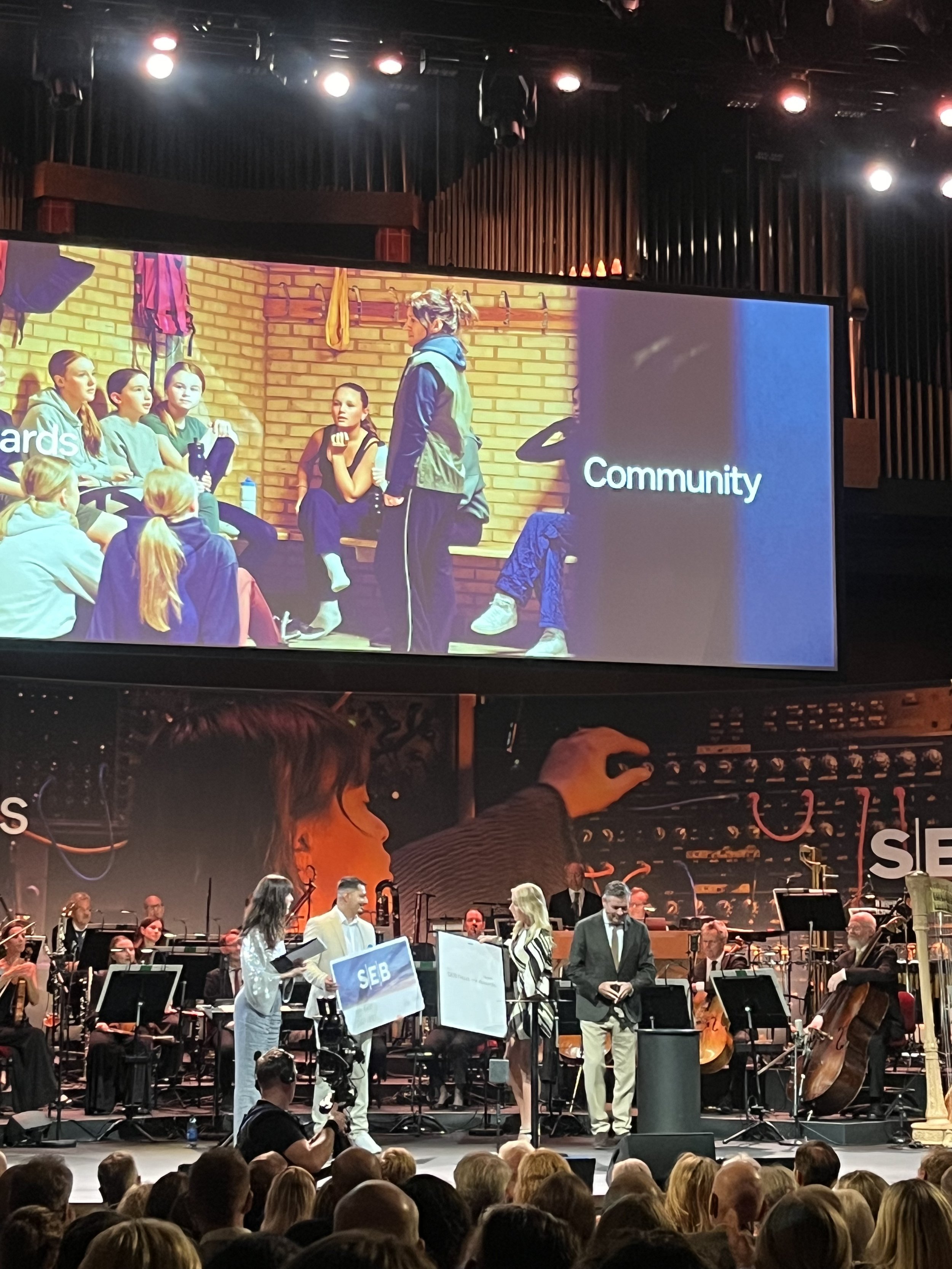
SEB Next Awards Finals on September 5th

On September 5th, Engineers Without Borders Sweden (EWB-SWE) proudly participated in the prestigious SEB Next Awards finals, held in the beautiful Konserthuset in Stockholm. Nominated in the Community category, our organisation was represented by Chairperson Jan Burenius, Secretary General Caroline Edelstam, Board Member Salman Rahman, and member Ellen Andréasson.

Jan Burenius and Ellen Andréasson did a fantastic job presenting the mission and impact of EWB-SWE, both during the jury session in the afternoon and on stage during the evening event. The competition in the Community category was incredibly strong, and we extend our heartfelt congratulations to all participants, especially to TryggRätt for their well-deserved win.

We are deeply grateful to SEB for the opportunity to be part of such an inspiring event, celebrating the spirit of innovation and community. And we would like to thank SEB and The Next Awards for their support in creating positive and impactful change!