Vatten för fred! Världsvattendagen – den 22 mars!

This World Water Day, EWB-SWE champions UN Water’s “Water for Peace” initiative, highlighting the critical role water plays in fostering global harmony and sustainability.

Over 3 billion people depend on transboundary waters, yet significant cooperation gaps exist. As climate change and population growth present increasing challenges, it's crucial we unite to protect our most vital resource. “Water for Peace” underscores the importance of collaborative water management for prosperity, resilience, and peace.

Go to the UN Water web

Make a Move for Water!

There are several ways to get involved this World Water Day. The organisation Clean International has made a poster to inspire action. You can also sign up on their web as a group or individual.  Here are a few ideas:

  • Pick up trash along a waterway

  • Help raise awareness by sharing information on social media

  • Help plant trees

  • Help organize a walk to recognize the long walk people are making daily for water

  • Save water at your workplace

  • Help educate kids on the water crisis

Den internationella lyckodagen – och varför den är viktig

I dag, den 20 mars, firar vi tillsammans med världen den internationella lyckodagen, en dag som ägnas åt att uppmärksamma lyckans betydelse i våra liv. Denna dag, som inrättades av FN:s generalförsamling den 12 juli 2012 och har firats årligen sedan dess, påminner oss om att lycka är ett grundläggande mänskligt mål och en grundläggande mänsklig rättighet.

I dessa svåra tider kan det kännas överväldigande att försöka hitta glädje och tillfredsställelse, men det är viktigare än någonsin att fundera över vad som verkligen gör oss lyckliga. Caroline Edelstam, generalsekreterare för Ingenjörer utan gränser EWB-SWE), delar med sig av ett starkt budskap:

"Jag blir glad när jag kan bidra till att göra världen lite bättre. Det finns så många problem i världen, och så mycket som händer i våra liv. Jag tror att det är bra att oftare fundera över vad som gör en lycklig, för det är där ens energi och motivation ligger."

När vi firar den internationella lyckodagen, låt oss ta en stund att fundera över vad som gör oss glada och hur vi kan sprida glädje till andra. Oavsett om det handlar om att ge en hjälpande hand, dela med sig av ett leende eller bidra till initiativ som syftar till att förbättra vår värld, så räknas varje vänlig gest.
 
Vad gör dig lycklig? Låt oss idag lova att inte bara sträva efter vår egen lycka, utan också att skapa en miljö – och en värld – där alla kan finna glädje. Dela dina tankar och delta i samtalet med #InternationalDayOfHappiness.

Nytt samarbete inom mediebevakning

A new cooperation has been initiated between the Swedish media company NewsMachine and EWB-SWE for press room services and national and international media monitoring.

One of the many useful features, is the possibility to create an international newsfeed on the EWB-SWE web page covering the EWB world globally. There is also the possibility to reach national and international media through the press room services.

– We see this as an excellent way to monitor interesting things that are happening in EWB sphere internationally, but also to reach out with important news from our own organisation. We are looking forward to exploring the possibilities and developing the cooperation further, says Caroline Edelstam, EWB-SWE Secretary-General.

“There is room for more engineers in the world”

Image Screen shot from Ingenjören, March 5, 2024. Sveriges Ingenjörer

Christian Naccache, a longstanding member of Engineers Without Borders Sweden, has found his calling in the complex yet rewarding field of aid work. He currently serves as an officer at the Swedish Embassy in Maputo, Mozambique. As he reflects on the three years since completing his trainee program, the story of his career path is a testament to the impact that engineers can have on global challenges.

In a 2021 interview with Ingenjören, Engineers of Sweden’s member magazine, Naccache shared his journey from finishing his trainee program, securing a position at Sida, and awaiting an embassy assignment overseas. His first posting came in September of that year, delayed by the COVID-19 pandemic, at the embassy in Rwanda.

Currently, Naccache serves as an officer at the embassy in Maputo, Mozambique. He manages the climate and environment portfolio and has recently taken on the energy portfolio as well. His role is crucial in selecting and overseeing projects that address Mozambique’s significant challenges, such as vulnerability to climate change and threats to biodiversity due to resource extraction.

Naccache’s work spans a variety of projects aimed at improving energy supply, conserving biodiversity, and promoting sustainable construction practices. This includes initiatives to enhance resilience in rural environments and protect national parks from poaching. His engineering background has been invaluable in this context, enabling him to analyze problems and make quick, on-the-spot calculations during field visits. This technical acumen is essential for grasping the nuances of issues like emission trading and contributing to the formulation of new legislation in Mozambique.

Reflecting on the complexity of aid work, Naccache has grown to appreciate the intricate balancing act of coordinating projects, navigating bureaucracy, and working with diverse partners and stakeholders. He enjoys the multifaceted nature of his job, from engaging in technical analysis to participating in high-level discussions and seeing firsthand the impact of the projects he supports.

Formally employed by Sida and stationed at the embassy on loan, Naccache’s journey underscores the unique opportunities available to engineers in the aid sector. This spring, he will welcome an engineering intern, highlighting the rare yet valuable presence of engineers in embassy internships. Naccache advocates for more engineers to explore the possibilities within aid work, emphasizing the significant role they can play in making a tangible difference in the world.

As Sida reopens applications for its trainee program, the call for more engineers like Naccache is clear. The program offers a pathway to meaningful work in aid, providing training, experience, and the chance to contribute to global efforts in climate, environment, and beyond. With applications open until March 25, the opportunity to join this impactful field awaits those ready to make a difference.

“There is room for more engineers in the world”, and the journey of Christian Naccache is a shining example of the impact they can have.


Ethical Issues are Increasingly Important for Engineers

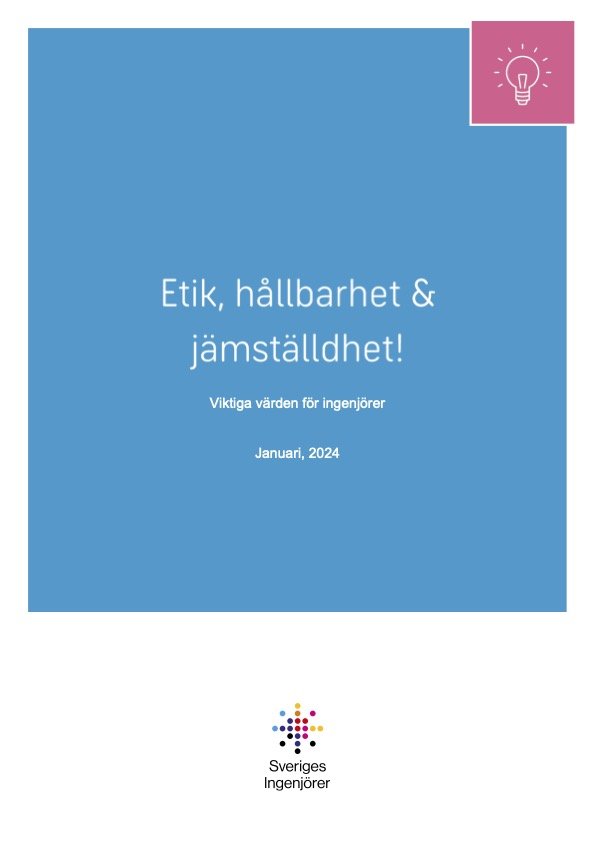
A recent report from Sveriges Ingenjörer has shed light on the shifting priorities among engineers when it comes to choosing their employers.

The comprehensive survey, which included responses from 1,009 engineers, reveals a significant trend: engineers are increasingly prioritizing ethical practices, ecological responsibility, and equality in the workplace.

The findings indicate that a substantial 83% of engineers consider it important for their employers to actively engage in ethical matters—an increase of 12 percentage points from 2014. Furthermore, 84% of engineers underscore the importance of environmental stewardship on the part of their employer.

The report highlights a noteworthy point: these issues are particularly important to female engineers. While there is a growing concern among male engineers, the commitment to these matters remains much stronger among women.

Contrary to some beliefs that younger generations are more inclined towards ethical, sustainable, and equal workplaces, the report found no significant difference in opinions between younger and older engineers.

A follow-up survey, which included interviews alongside questionnaires, explored the consequences of employers' ethical failings. A striking 88% of engineers stated their work motivation would decline if their employer was involved in corruption. Meanwhile, 67% would not consider employment with a company engaged in environmentally harmful activities.

The implications are clear: to attract and retain engineering talent, employers must take an active stance on ethics and sustainability. Not only do these principles affect a company's reputation, but they are also crucial for successful recruitment and maintaining staff motivation, which ultimately impacts productivity and profitability.

As an organization committed to engineers and their professional values, EWB-SWE stands firmly behind the push for workplaces that respect these core principles, championing a future where ethical practice and sustainable development are at the heart of the engineering profession.

***

Read the article in Swedish on Sveriges Ingenjörer’s web “Etiska frågor allt viktigare för ingenjörerna” where you can download the full report as well.