Queen Silvia's Foundation CATCH concludes after a decade of dedicated service

We are honored to be featured in the commemorative book marking the conclusion of Queen Silvia's Foundation Care about the Children (CATCH) after a decade of dedicated service. This publication celebrates CATCH's remarkable contribution of sponsoring 80 projects with 80 million SEK, coinciding with Her Majesty's 80th Birthday.

Compiled in the fall of 2023, the book provides a summary of the foundation’s reach and offers everyone a glimpse into its journey. We express our appreciation to every donor who has contributed through CATCH, assisting in the mission to support, give hope, and transform lives.

A warm thank you goes out to the individuals and organizations mentioned for their dedicated commitment to the well-being of children.

We invite you to explore the CATCH homepage and read the stories of incredible organizations working for the welfare of children. EWB-SWE is proud to be part of this group and we extend our warmest gratitude to all involved.

To the government – do not raise the fundraising requirement

The government has signaled that the co-financing requirement for civil society's aid projects will triple by 2025. This requirement would hit small, non-profit organizations very hard and risks eliminating an entire segment of actors within Swedish development cooperation, write 69 representatives of the Swedish civil society, including Engineers Without Borders Secretary-General Caroline Edelstam.

The government has adopted a new aid strategy for civil society and decided to raise the contribution that civil society organizations themselves must provide. The smallest organizations face the largest increase. For us, this increase means a doubling for this year and a tripling for next year. In practice, this means that non-profit organizations that cannot quickly raise funds may be forced to shut down their aid work - something that will lead to significant consequences for the work of thousands of local organizations worldwide. The article was published March 26, in the Dagens Arena news magazine. Please see a summary of the article in English below, and a link to the article in Swedish.

Summary of the debate article

The debate article outlines concerns from 69 representatives of the Swedish civil and non-profit sector about government plans to triple the co-financing requirement for civil society aid projects by 2025. This change is seen as particularly burdensome for small, non-profit organizations, potentially eliminating a significant segment of actors within Swedish development cooperation. The article highlights that these organizations are skilled at conducting efficient projects with minimal resources, but lack the capacity to quickly generate the increased funds required. The government's strategy, which does not apply similar co-financing requirements to political parties' aid organizations or other aid strategies, is criticized for lacking a consultation or impact analysis with the civil society actors it affects.

The authors argue that the increased funding requirement will divert resources and focus from their core mission of supporting civil societies in developing countries, leading to reduced or eliminated funding for projects. This could undermine partnerships between Swedish non-profits and development countries, counteracting the goal of a vibrant civil society both nationally and globally. The article suggests that the government either misunderstands the consequences of their decision or intends to exclude Swedish civil society organizations from aid efforts, which would be alarming from a democratic perspective. The authors call for the government to reconsider the increase in the co-financing requirement, emphasizing the important role of small, non-profit organizations in achieving diverse, effective, and sustainable development cooperation.

Vatten för fred! Världsvattendagen – den 22 mars!

This World Water Day, EWB-SWE champions UN Water’s “Water for Peace” initiative, highlighting the critical role water plays in fostering global harmony and sustainability.

Over 3 billion people depend on transboundary waters, yet significant cooperation gaps exist. As climate change and population growth present increasing challenges, it's crucial we unite to protect our most vital resource. “Water for Peace” underscores the importance of collaborative water management for prosperity, resilience, and peace.

Go to the UN Water web

Make a Move for Water!

There are several ways to get involved this World Water Day. The organisation Clean International has made a poster to inspire action. You can also sign up on their web as a group or individual.  Here are a few ideas:

  • Pick up trash along a waterway

  • Help raise awareness by sharing information on social media

  • Help plant trees

  • Help organize a walk to recognize the long walk people are making daily for water

  • Save water at your workplace

  • Help educate kids on the water crisis

Den internationella lyckodagen – och varför den är viktig

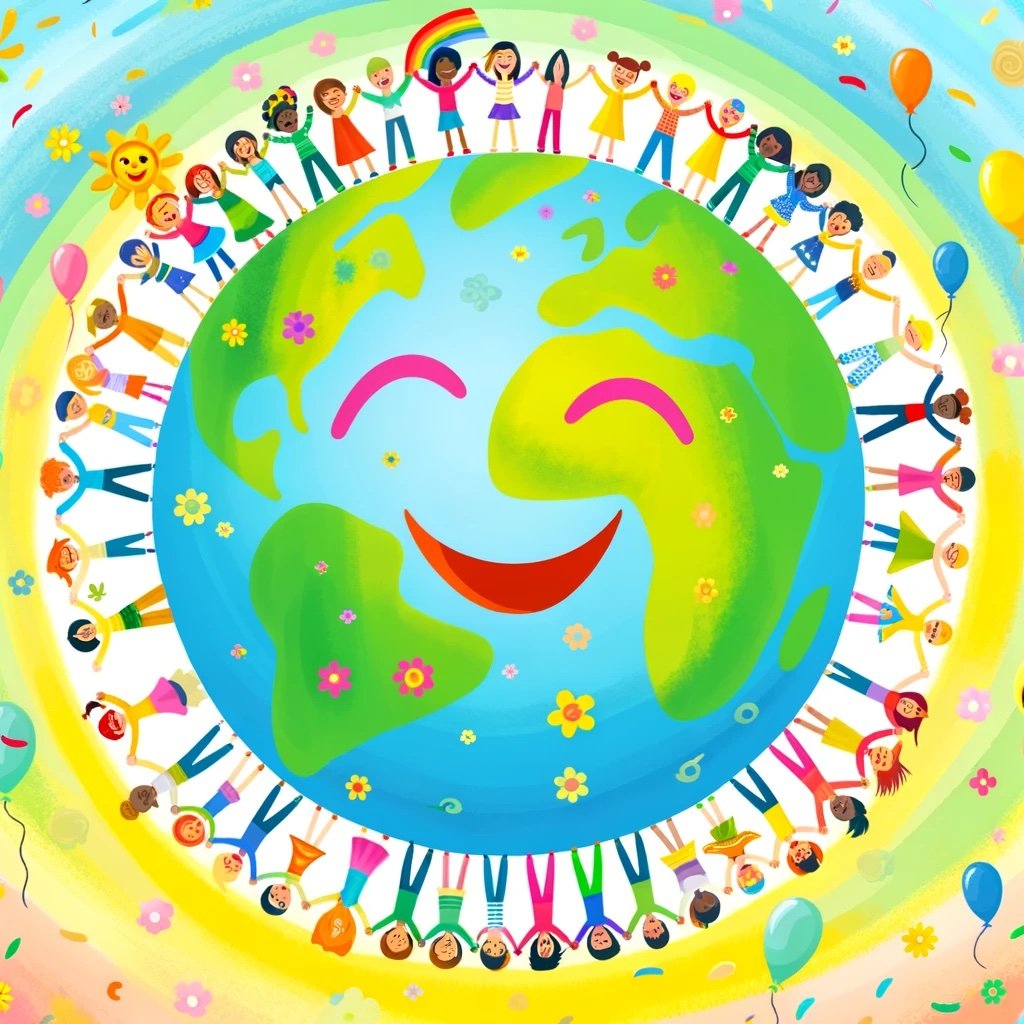
I dag, den 20 mars, firar vi tillsammans med världen den internationella lyckodagen, en dag som ägnas åt att uppmärksamma lyckans betydelse i våra liv. Denna dag, som inrättades av FN:s generalförsamling den 12 juli 2012 och har firats årligen sedan dess, påminner oss om att lycka är ett grundläggande mänskligt mål och en grundläggande mänsklig rättighet.

I dessa svåra tider kan det kännas överväldigande att försöka hitta glädje och tillfredsställelse, men det är viktigare än någonsin att fundera över vad som verkligen gör oss lyckliga. Caroline Edelstam, generalsekreterare för Ingenjörer utan gränser EWB-SWE), delar med sig av ett starkt budskap:

"Jag blir glad när jag kan bidra till att göra världen lite bättre. Det finns så många problem i världen, och så mycket som händer i våra liv. Jag tror att det är bra att oftare fundera över vad som gör en lycklig, för det är där ens energi och motivation ligger."

När vi firar den internationella lyckodagen, låt oss ta en stund att fundera över vad som gör oss glada och hur vi kan sprida glädje till andra. Oavsett om det handlar om att ge en hjälpande hand, dela med sig av ett leende eller bidra till initiativ som syftar till att förbättra vår värld, så räknas varje vänlig gest.
 
Vad gör dig lycklig? Låt oss idag lova att inte bara sträva efter vår egen lycka, utan också att skapa en miljö – och en värld – där alla kan finna glädje. Dela dina tankar och delta i samtalet med #InternationalDayOfHappiness.