International Day of Science, Technology, and Innovation for the South: Advancing Science, Technology, and Innovation for a Fairer Global Future 

Today, 16th September, marks the International Day of Science, Technology, and Innovation for the South, an initiative recently established by the United Nations General Assembly. The day was officially proclaimed following the G77 and China Summit on Science, Technology, and Innovation held in Havana in 2023, to highlight the importance of science, technology, and innovation (STI) for sustainable development, particularly in the Global South

WATER TANK CONSTRUCTION, THE MAVUNO PROJECT, KAGERA, TANZANIA

The Global South includes nations in Africa, Latin America, Asia, and parts of the Middle East characterised by lower income levels, limited infrastructure, and economic and environmental vulnerabilities. For many of these nations, achieving sustainable development goals (SDGs) remains a daunting task due to persistent economic disparities, environmental challenges, and social inequalities. However, through the responsible use of technology and innovation, there is significant potential for positive impact.

At Engineers Without Borders Sweden (EWB-SWE), we are dedicated to creating sustainable engineering solutions that leave a lasting impact on communities in the Global South. Our projects focus on collaborating with local partners to deliver practical, impactful solutions that empower communities. We emphasise knowledge transfer, training, and capacity building, enabling communities to independently tackle development challenges and improve their long-term resilience.

The Role of Science, Technology and Innovation (STI) in the Global South

While global R&D spending rose to $2.5 trillion in 2022, the benefits remain unevenly distributed. High-income countries account for 77% of global R&D investment, while low-income countries contribute only 0.3%. This disparity limits access to technology and innovation in the Global South, creating barriers to addressing key issues like healthcare, education, and infrastructure. 

At EWB-SWE, we believe in the power of partnerships to create meaningful impact. Our international projects are designed to be locally driven and adapted to the specific needs of each community. Whether in water and sanitation, renewable energy, or infrastructure development, we work alongside local engineers and organisations to deliver innovative solutions with a focus on long-term sustainability.

Engineering for Humanity: Innovation as a Driver of Sustainable Solutions

The International Day of Science, Technology, and Innovation for the South serves as a reminder of the critical role that technology and innovation must play in achieving the SDGs. At EWB-SWE, we believe that innovation is not only about solving technical challenges—it’s about creating real, tangible impact in people’s lives.

One example of this is our work in renewable energy and water systems in rural Africa. By collaborating with local partners, we develop solar-powered water pumps and other sustainable solutions that directly address community needs while supporting local innovation and capacity. This aligns with our core belief in Engineering for Humanity—using engineering as a force for positive change in the world. 

Empowering the Global South through Impactful Collaboration

SOLAR PANELS DELIVERY FOR NEW SCHOOL BUILDING

Creating sustainable development in the Global South is not just about delivering technology—it’s about empowering local communities to take control of their own futures. Through our projects, EWB-SWE facilitates skills transfer and knowledge sharing, ensuring that the impact we make is lasting and that communities have the tools they need to continue innovating.

The International Day of Science, Technology, and Innovation for the South is an important milestone, underscoring the need to utilise the full potential of STI for global development. By focusing on collaboration, knowledge exchange, and empowering local engineers and communities, EWB-SWE is committed to ensuring that the impact of our work endures long after a project is completed. 

As we celebrate this important day, let’s come together to strengthen our determination to continue using new ideas and technology to build a fairer, more inclusive, and sustainable future for everyone.

SEB Next Awards Finals on September 5th

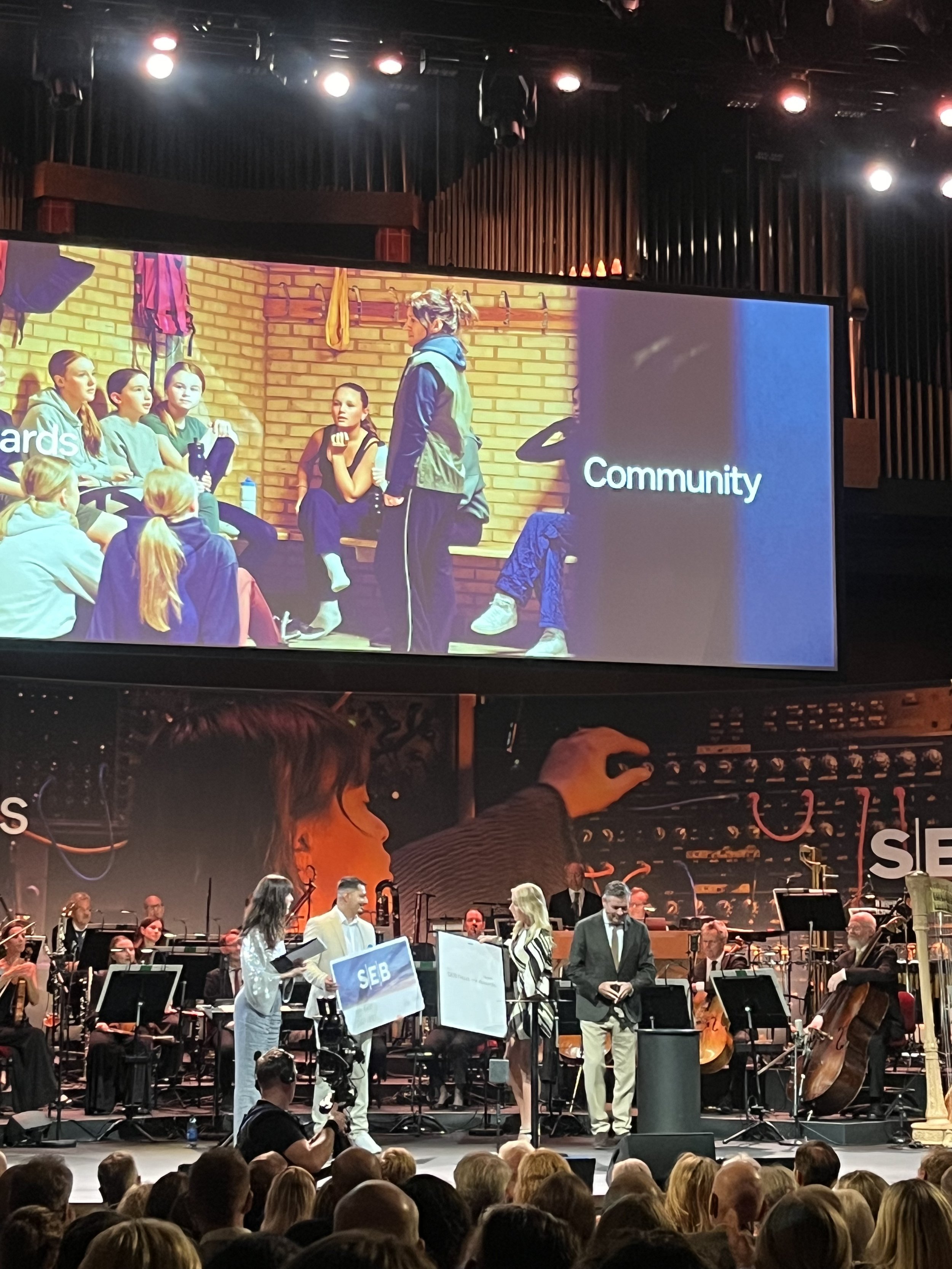
On September 5th, Engineers Without Borders Sweden (EWB-SWE) proudly participated in the prestigious SEB Next Awards finals, held in the beautiful Konserthuset in Stockholm. Nominated in the Community category, our organisation was represented by Chairperson Jan Burenius, Secretary General Caroline Edelstam, Board Member Salman Rahman, and member Ellen Andréasson.

Jan Burenius and Ellen Andréasson did a fantastic job presenting the mission and impact of EWB-SWE, both during the jury session in the afternoon and on stage during the evening event. The competition in the Community category was incredibly strong, and we extend our heartfelt congratulations to all participants, especially to TryggRätt for their well-deserved win.

We are deeply grateful to SEB for the opportunity to be part of such an inspiring event, celebrating the spirit of innovation and community. And we would like to thank SEB and The Next Awards for their support in creating positive and impactful change!

Celebrating International World Charity Day – September 5th

Today, we join the global community in celebrating International World Charity Day!

This day serves as a reminder of the power of charity and the positive impact it can have on people’s lives. At Engineers Without Borders Sweden (EWB-SWE), we see first-hand how charity transforms communities, and we are proud to contribute to this change through our work.

EWB-SWE is deeply committed to improving the lives of people around the world by providing sustainable engineering solutions to communities in need. Our international projects focus on ensuring access to clean water, sanitation, reliable energy, and essential infrastructure – the building blocks for healthy, empowered communities. These initiatives are closely aligned with the United Nations Sustainable Development Goals, specifically focusing on Goals 6 (Clean Water and Sanitation) and 7 (Affordable and Clean Energy), amongst others.

Charity with the power to change lives

For example, through our collaborations with local communities, we’ve helped build water supply systems, provided energy solutions to rural areas, and supported sanitation projects that significantly improve public health. Every project is powered by the dedication of our volunteers and the generosity of our donors and partners.

But we cannot do this alone. EWB-SWE is entirely reliant on the financial support of our partners, foundations, funds, and of course, the public. Volunteers who give their time and expertise, as well as donors who contribute financially, are vital to the work we do. Your contributions make it possible for us to continue building a better, more sustainable future for everyone.

Your Support Matters – a lot

While we recognise that the challenges in many parts of the world are severe, charity brings hope and light into people’s lives. By coming together, we can uplift those in need and create lasting, positive change. On this International Day of Charity, we invite you to reflect on the impact we can have when we work together for a common cause. Whether it’s through volunteering, donating, or simply spreading the word, your support matters.

Thank you to everyone who has supported EWB-SWE’s mission. With your help, we can continue making the world a better place, one project at a time.

The images shown here are from our recent campaign “Water is life” that focuses on urgent water issues in three areas on three different continents: South America, Asia and Africa.

Support our international projects

High-level Seminar: Climate change and water challenges in Latin America

Today September 3, EWB-SWE is co-arranging a very interesting seminar regarding climate change and the water challenges in Latin America.

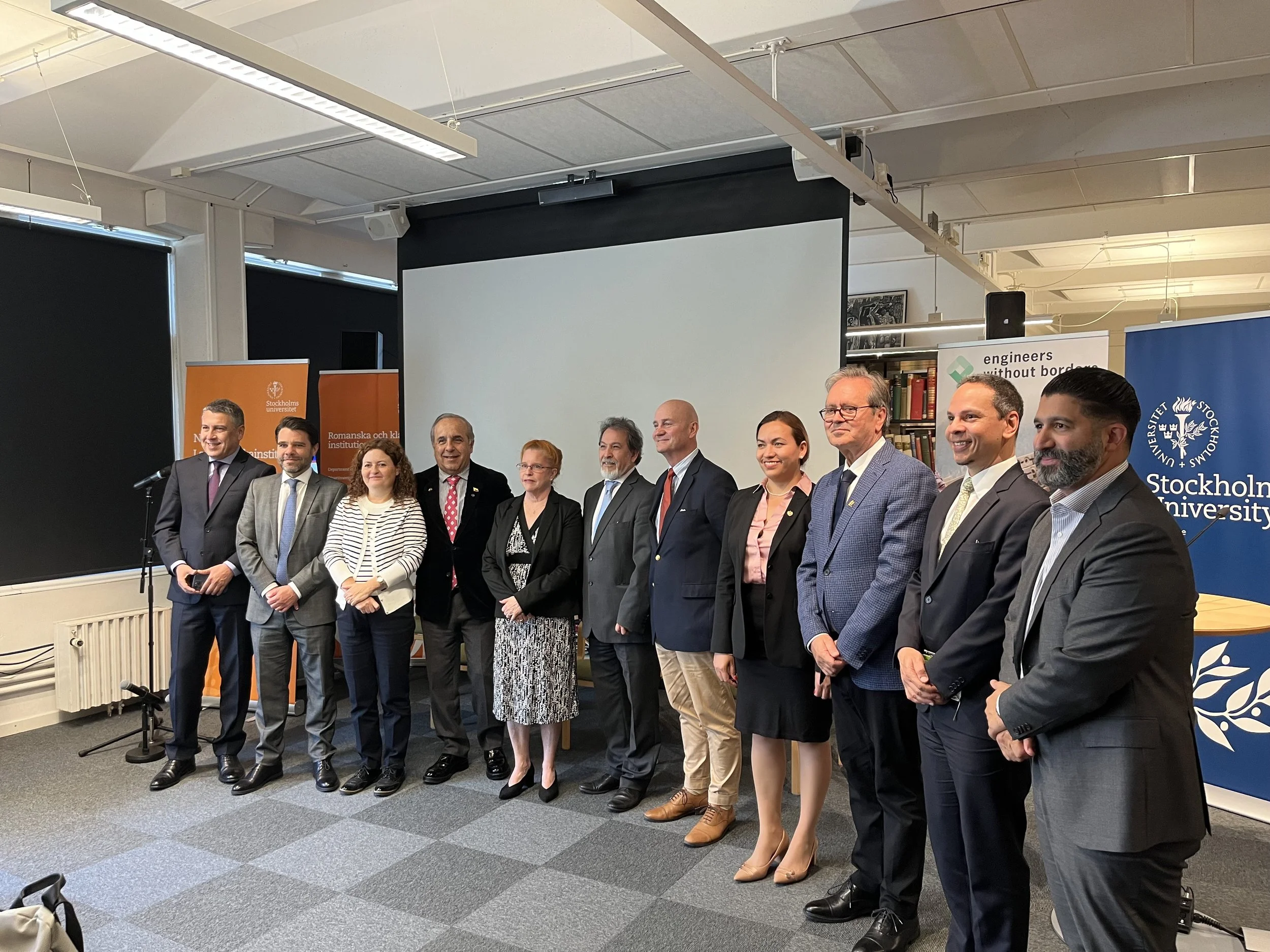
The library of the Latin America Institute at Stockholm University was packed, and there are more than 70 people following the seminar online. It's clear that the interest in these issues are great. The seminar is live-streamed as well. Most Latin American embassies were represented at the event.

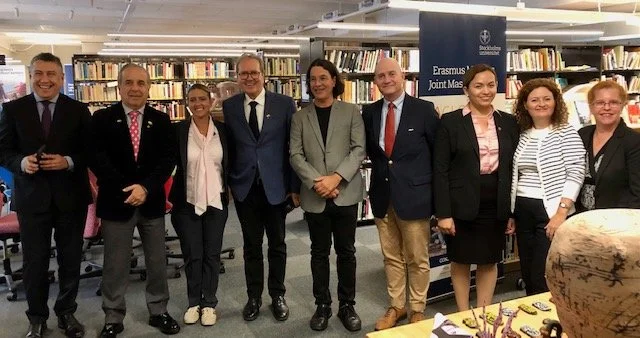
From EWB-SWE are Caroline Edelstam, Secretary-General, Tommy Lindström, both are speaking in the seminar, also present were Salman Rahman for the EWB-SWE Board and Carin Balfe Arbman, from EWB-SWE Communications.

The Nordic Institute of Latin American Studies (NILAS) at Stockholm University, together with Engineers without Borders Sweden, the European Commission, Stockholm Environment Institute (SEI), and Norden International, with the support of GRULAC Stockholm, welcome you to a discussion on water challenges in Latin America:

The seminar addresses critical water issues in Latin America, such as the lack of infrastructure, insufficient support from the international community, and the risks in planning. Participants will analyze solutions and innovations emerging from civil society, and examine their impact on strengthening human rights, peace, governance, sustainability, and equal water access in Latin America.

DAGORDNING

17.30. Dr. Thaïs Machado-Borges, Director of Nordic Institute of Latin American Studies, and Ms. Caroline Edelstam, Secretary General of Engineers without Borders Sweden, greet welcome.

17.35. Ambassador Milton Soto Santiesteban, Ambassador of Bolivia to Sweden and Chair of GRULAC in the Nordics, gives introduction to the challenges of climate change in Latin America.

17.40. Mr. Tommy Lindström, Head of competence group Energy-and Waste Management and Project Leader of Aqua 365 Chile, at Engineers without Borders Sweden, introduces the water situation in Latin America in regard to climate change and gives presentation of the Aqua 366, a WASH*-project in Chile.

17.50. Ms. Adriana Soto Trujillo, Research Associate at Stockholm Environment Institute, and environmental engineer with experience from working in the practitioner-research spheres of water management planning, climate change adaptation and sustainable sanitation, gives aspects of integration of WASH and IWRM** in Bolivia.

18.00. Ms. Nhilce Esquivel, MSc, is a specialist in disaster risk reduction, sustainability, and innovation working as a researcher at Stockholm Environment Institute. Her current work focuses on developing tools and applying human centre design approach into projects aiming to improve decision making in the water, WASH, and climate adaptation sectors.

18.10. Mr. Erik von Pistohlkors, Deputy Head of the Representation at the European Commission in Sweden, concludes with the EU-perspective on the support of the international community in the future; what could be the next steps for support and innovation for Latin America?

18.20. Discussion and questions led by the moderator, Dr. Andrés Rivarola Puntigliano, Professor at the Nordic Institute of Latin American Studies, Stockholm University.

18.45. End of seminar.

*WASH = Water, Sanitation and Hygiene

**IRWM = Integrated Water Resources Management

Please see some images from the seminar below:

BELOW: Presentations by Dr. Thaïs Machado-Borges, Director of Nordic Institute of Latin American Studies, Ms. Caroline Edelstam, Secretary General of Engineers without Borders Sweden, Ambassador Milton Soto Santiesteban, Ambassador of Bolivia to Sweden and Chair of GRULAC in the Nordics, Mr. Tommy Lindström, Head of competence group Energy-and Waste Management and Project Leader of Aqua 365 Chile, at Engineers without Borders Sweden, Ms. Adriana Soto Trujillo, Research Associate at Stockholm Environment Institute, Ms. Nhilce Esquivel, MSc, is a specialist in disaster risk reduction, sustainability, and innovation working as a researcher at Stockholm Environment Institute, Mr. Erik von Pistohlkors, Deputy Head of the Representation at the European Commission in Sweden, Moderator: Dr. Andrés Rivarola Puntigliano, Professor at the Nordic Institute of Latin American Studies, Stockholm University.

HOW TO SOLVE THE PROBLEM: “Turning Sewage into Irrigation Water and Biodiesel in Chile”

We are excited to present an insightful interview with Tommy Lindström titled “Turning Sewage into Irrigation Water and Biodiesel in Chile,” in collaboration with the engaging podcast How to Solve the Problem. Tommy Lindström, Head of the Competence Group for Energy and Waste Management at Engineers Without Borders Sweden, brings extensive experience in water management in Latin America.

The podcast, founded and hosted by Jonathan Cygnaeus—an engineer and former EWB-SWE volunteer from EWB LiU in Linköping—delivers thought-provoking content on pressing global issues as well as everyday problems.

A special thank you to Tommy Lindström for sharing his deep knowledge and experience in the field. Tommy will also be part of the panel at our water seminar on September 3rd.

The podcast episode is released today August 29.

Listen to the podcast here: